
Key Points
- The strongest outdoor living investment is usually a coordinated mix of usable space, durable materials, shade, lighting, and landscaping.
- A patio, outdoor kitchen, and overall landscape upgrade rank among the highest cost-recovery projects in the National Association of REALTORS® outdoor features report.
- In St. Louis, the best backyard improvements solve practical problems first, including drainage, grading, weather exposure, maintenance, and how the space will be used.
If you are asking which outdoor living project adds the most value to a home, the honest answer is that there is no single winner for every property. A patio may be right for one household, while an outdoor kitchen, landscape renovation, or drainage solution may be better for another.
The best outdoor living projects improve how the yard functions, how often the family uses it, and how well the design fits the home. This guide compares popular backyard upgrades and explains what drives outdoor renovation ROI in St. Louis. For examples of complete outdoor transformations, explore Rescue Landscaping’s outdoor living services.
What “value” means in an outdoor living investment
Homeowners often use “value” to mean resale value. That matters, but a backyard can also return value through more comfortable entertaining, better drainage, safer circulation, lower maintenance, and more time spent at home.
The National Association of REALTORS® evaluates outdoor projects through both cost recovery and homeowner satisfaction. In its 2023 Remodeling Impact Report: Outdoor Features, the typical Joy Score across the projects studied was 9.7 out of 10. The report also cautions that actual cost and cost recovery vary with design, materials, location, home condition, and homeowner preferences.
A project can therefore be an excellent lifestyle investment without returning its full construction cost at resale.
Outdoor living projects with the strongest value potential
These projects combine practical use with broad homeowner appeal. The cost-recovery figures are estimates from the NAR report, not guarantees for a specific St. Louis property.
| Outdoor project | Estimated cost recovery | Why it can add value | Main planning caution |
|---|---|---|---|
| Overall landscape upgrade | 100% | Improves the property as a complete system | A scattered collection of plantings may not create a cohesive result |
| Outdoor kitchen | 100% | Adds a dedicated place to cook, dine, and entertain | Utilities, shade, appliances, and maintenance affect the design |
| New patio | 95% | Creates durable outdoor living space | Base preparation, drainage, grade, and material selection are critical |
| New wood deck | 89% | Extends living space and connects the home to the yard | Maintenance and long-term material performance matter |
| Tree care | 87% | Supports shade, appearance, and landscape character | Poor pruning or placement can create future maintenance issues |
| Irrigation system | 83% | Helps maintain plantings and reduce inconsistent watering | The system should match plant needs rather than water everything identically |
| Landscape lighting | 59% | Improves visibility, atmosphere, and nighttime curb appeal | Too many fixtures can make a design feel harsh |
| Fire feature | 56% | Creates a social focal point and extends evening use | Safety clearances, fuel choice, and local requirements matter |
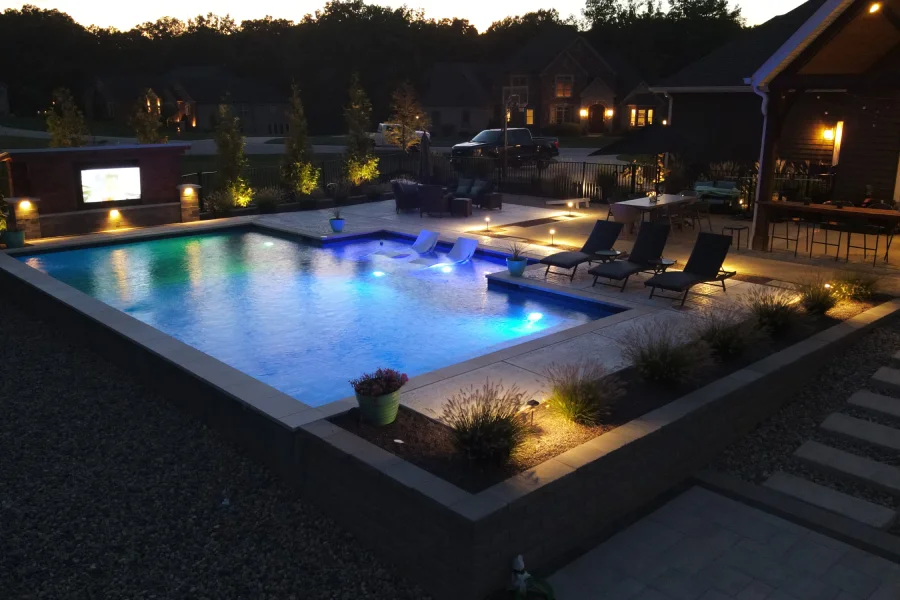
| In-ground pool addition | 56% | Adds recreation and can anchor a larger design | Maintenance, safety, site, and insurance deserve careful review |
1. A landscape upgrade that fixes the whole yard
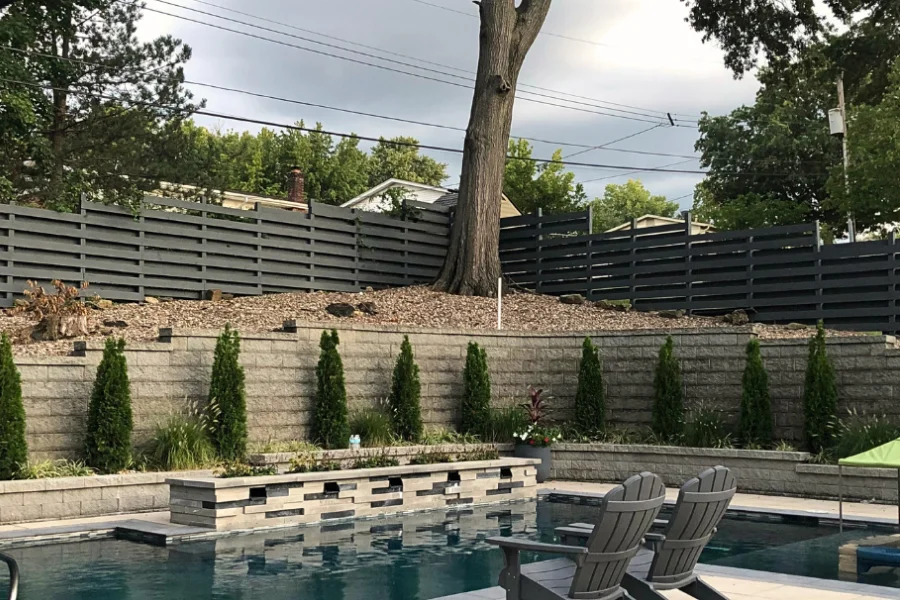
A complete landscape upgrade can be one of the most valuable backyard improvements because it addresses several visible and practical issues at once. The design may combine planting, lawn areas, walkways, retaining walls, drainage, lighting, and gathering spaces instead of treating each feature as an unrelated purchase.
This approach is useful when the yard feels unfinished, slopes toward problem areas, or has older elements that no longer work together. For a St. Louis property, identify where water moves after heavy rain, where people walk, and which areas receive sun or shade. A beautiful plan that ignores those conditions may cost more to maintain.
2. A patio designed around real use
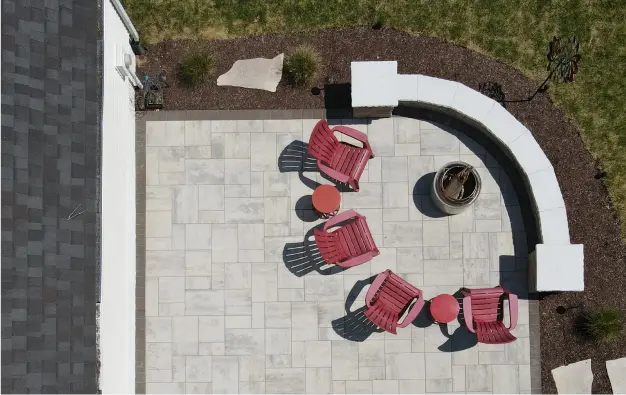
A patio is often the foundation of an outdoor living space. It provides a stable surface for dining, seating, grilling, and circulation, and it can connect the back door to the rest of the landscape.
The highest-value patio is not necessarily the largest one. It has enough room for its intended furniture, comfortable movement, and a sensible relationship to the home. Pavers, stamped concrete, natural stone, and brick create different looks and maintenance requirements.
Before selecting a finish, discuss the base, edges, transitions, slope, and water management. The surface is visible, but preparation below it often determines whether a patio remains stable and comfortable.
3. An outdoor kitchen that earns its footprint
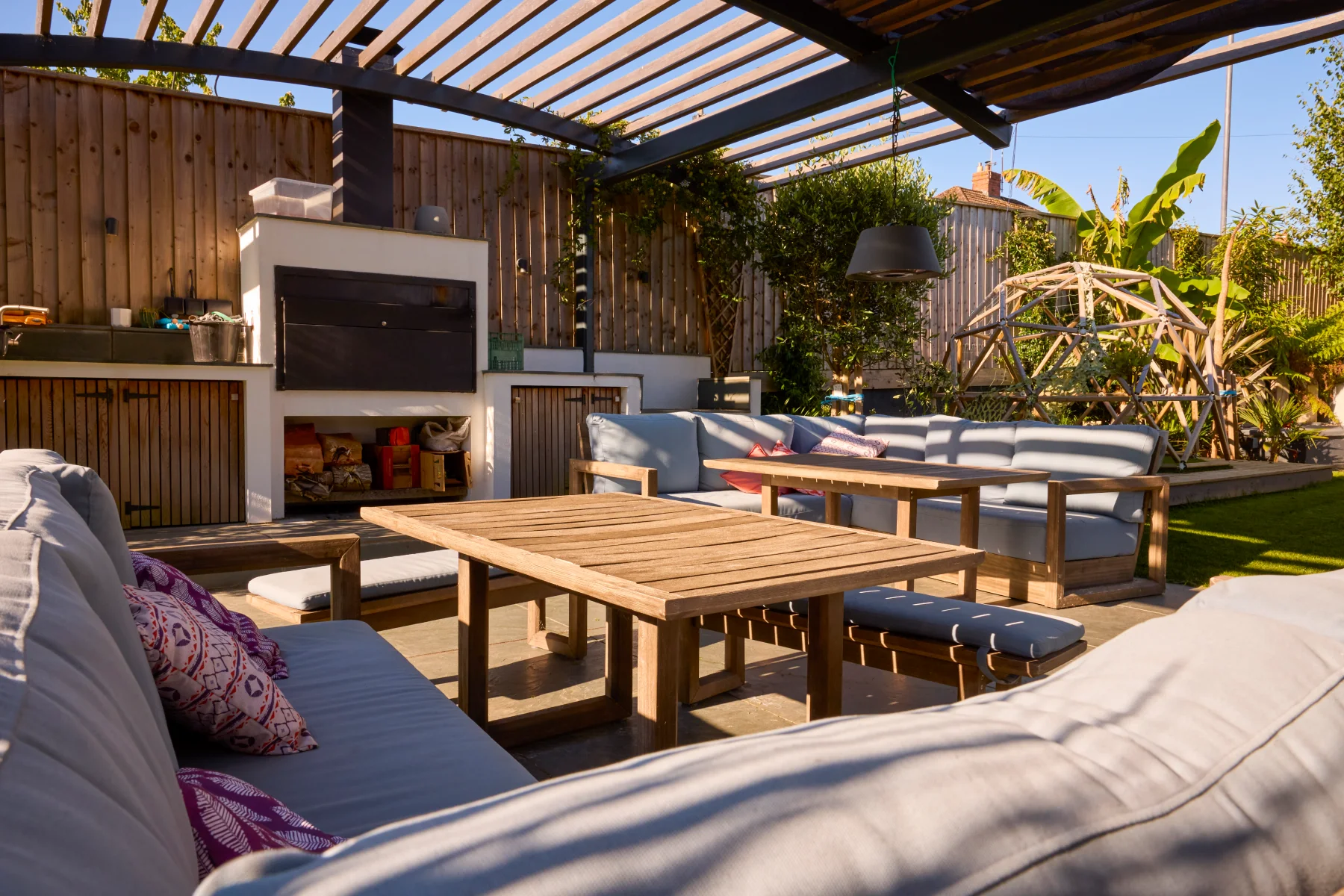
An outdoor kitchen can be a strong outdoor living investment when the household genuinely cooks and entertains outside. The design should answer practical questions before appliances are selected: How far is the kitchen from the indoor kitchen? Where will food be prepared and served? Is there shade? How will smoke, grease, utilities, and weather exposure be handled?
A compact cooking and serving zone may provide more value than an oversized installation with features that rarely get used. Plan the kitchen with the patio, dining area, lighting, and circulation together.
4. Shade and shelter for more usable seasons
A pergola, gazebo, pavilion, retractable cover, or similar structure can increase the number of days a family uses the yard. Shade also makes a patio or outdoor kitchen more comfortable during hot weather.
The right choice depends on the desired protection, the home’s architecture, location, and material maintenance.
5. Lighting, fire features, and circulation details
Smaller backyard upgrades can make the overall design work better. Path lighting improves visibility. Landscape lighting can highlight trees, walls, and planting beds. A fire pit or fireplace can create a focal point and extend evening use.
These features should support the plan rather than being added randomly at the end. Place lighting where people walk and gather, and select a fire feature based on space, fuel type, safety clearances, and local requirements.
How to choose the right backyard upgrade for your budget
If you are not ready to complete the entire vision at once, ask a design-build firm to create a phased plan. Rescue Landscaping & Outdoor Living offers phased installation plans so homeowners can spread work over time while maintaining a cohesive design.
Use this order of operations:
- Correct site problems first. Address drainage, grading, erosion, unstable surfaces, or unsafe retaining conditions.
- Create the main use area. Build the patio, deck, walkway, or other foundation for the activities your household will do.
- Add comfort features. Consider shade, seating, lighting, heating, and weather protection.
- Add specialized features. Outdoor kitchens, water features, pools, and elaborate fire features affect utilities, safety, maintenance, and budget.
- Finish with planting and details. Use plantings, edging, lighting, and furnishings to connect the new work to the property.
This sequence prevents a common mistake: spending heavily on a visible feature before solving conditions that can damage it or make the yard difficult to use.
A practical checklist before starting backyard improvements
Before scheduling a consultation, answer these questions:
- What do we want to do outside that we cannot do comfortably now?
- Which problems must be fixed before construction or planting begins?
- How often will we cook, dine, entertain, relax, or play in the space?
- Which features need shade, lighting, utilities, drainage, or extra maintenance?
- Do we want one installation or a phased plan?
- How should the new work connect to the home, driveway, lawn, and existing landscape?
- Which materials and approvals fit the home, site, and maintenance preferences?
A professional consultation should turn those answers into a site-specific plan and make trade-offs visible before construction begins.
The bottom line on outdoor living value
The outdoor living projects with the strongest value potential improve everyday use and remain visually connected to the home. For many homeowners, that means starting with a cohesive landscape plan and a well-built patio, then adding an outdoor kitchen, shade, lighting, or a fire feature as the budget and lifestyle justify.
Rescue Landscaping & Outdoor Living provides landscape design and installation, patios, walkways, retaining walls, drainage solutions, outdoor kitchens, fire features, shade structures, lighting, water features, and complete outdoor living spaces in the St. Louis area. The company offers a free initial consultation and a consultation-to-design-and-build process.
If you are considering backyard upgrades in St. Louis, contact Rescue Landscaping & Outdoor Living to discuss which improvements should come first and whether a phased outdoor living investment makes sense for your property. Every project supports Stray Rescue of St. Louis.
Frequently Asked Questions
Which outdoor living project adds the most value to a home?
There is no universal answer. In the NAR outdoor features report, an overall landscape upgrade and outdoor kitchen each had an estimated 100% cost recovery, followed by a new patio at 95%. Actual value depends on design quality, property conditions, materials, local buyer expectations, and fit with the home.
Do backyard improvements increase resale value?
They can improve buyer appeal, curb appeal, functionality, and enjoyment, but they do not guarantee a dollar-for-dollar return. Projects that solve visible problems and create usable, durable space are generally easier to justify than features chosen only for appearance.
Should I complete my outdoor renovation all at once?
Not necessarily. A phased plan can make sense when the project includes drainage, retaining walls, a patio, planting, lighting, and an outdoor kitchen. Start with site conditions and the primary use area, then add comfort and specialty features within one cohesive design.