
Key points
- Standing water usually points to a surface slope, base, drainage-path, or nearby runoff issue, not simply a puddle to ignore.
- Good patio performance begins below the finished surface with site preparation, deliberate grading, and a plan for where water will go.
- A small, occasional puddle may call for observation or simple maintenance; recurring water, movement, or damage deserves professional diagnosis.
A patio should make the outdoor space easier to use, not create a wet spot you have to work around after every rain. When water remains on a patio, the immediate annoyance is obvious. The more important question is why it stayed there and what that moisture may be doing around the surface, base, edges, and nearby structures.
For St. Louis homeowners, patio drainage is worth considering during new construction and whenever a patio starts showing a pattern of standing water. This guide explains the common causes, what thoughtful drainage planning looks like, which observations you can make yourself, and when it is time to bring in a professional.
Why standing water on a patio is more than a surface nuisance
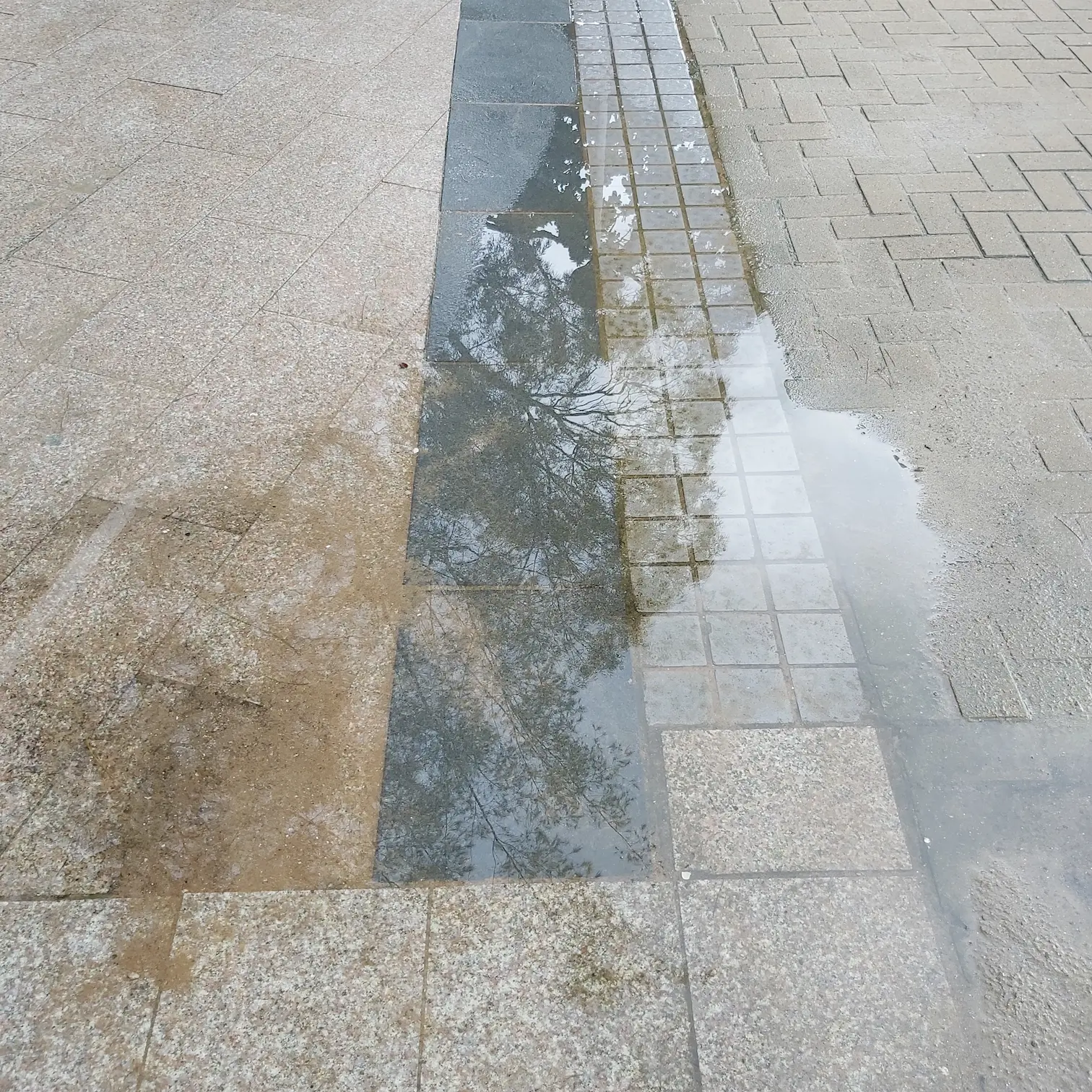
A shallow puddle can be temporary and harmless in some situations. A repeated puddle in the same place is different. It tells you that water is not moving off the patio as intended, or that water from somewhere else is arriving faster than the area can handle it.
That distinction matters because a patio is a system. Its finished pavers or stamped concrete are visible, but the ground beneath, prepared base, edges, and surrounding grade also affect performance. Repeated water can make the surface less pleasant and point to a drainage condition that needs closer attention.
Winter adds another reason to pay attention. Water that settles in low areas can freeze when temperatures drop. Repeated wet-and-freeze cycles can add stress where water is already collecting, so addressing the water path early is more practical than waiting for visible change.
A useful first step is to separate one-off weather from a pattern. Note where the water appears, how long it remains, whether it is coming from a downspout or adjacent slope, and whether the spot changes across several rain events. Those observations give a consultation a clearer starting point.
The most common paths that put water on a patio
Standing water on a patio rarely has one universal cause. Often, the visible puddle is the final stop in a larger water path. Looking at that path helps avoid a surface-only fix that leaves the underlying issue in place.
Patio grading sends water somewhere, by design
A patio needs a deliberate slope so water can leave the finished surface instead of settling on it. When a low point develops or the surface was not planned around the broader yard grade, water can collect even if the patio itself looks generally level to the eye. Patio grading in St. Louis is therefore not only about the patio plane. It is also about how that plane relates to nearby planting areas, walkways, walls, and the rest of the site.
Water must have a destination after it leaves the patio. A slope that moves water off one corner but creates a saturated area nearby has not fully solved the homeowner’s problem. The best approach considers the whole route, from the roof or yard source through the patio area and toward an appropriate drainage path.
Downspouts and surrounding runoff can overwhelm one spot
A downspout that discharges near a patio can send concentrated water toward the same edge over and over. So can a yard slope that naturally directs runoff across the surface. These are important clues because adding a small surface adjustment may not help if the patio is receiving water from above or from the side.
During your observation, watch for a stream entering at one edge, washed mulch, damp soil next to the patio, or a puddle that forms closest to a downspout. Those signs do not diagnose the full issue on their own, but they help identify where further evaluation should begin.
Paver patio drainage depends on what is below the surface
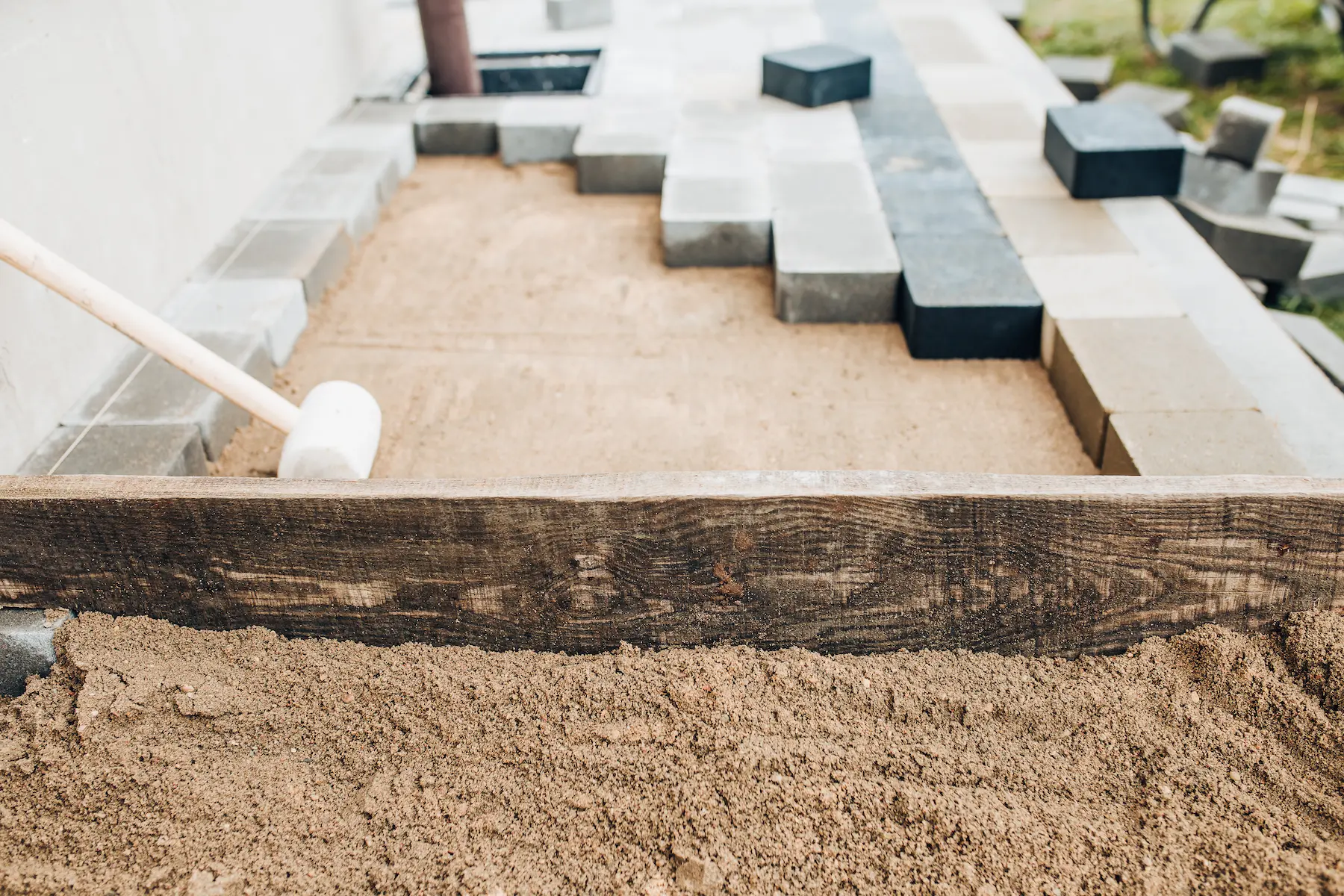
Pavers can create a beautiful, flexible finished patio, but the visible joints are not a complete drainage strategy by themselves. Paver patio drainage also depends on a properly prepared base and a finished surface that directs water intentionally. If water persists in one area, the question is not only whether the pavers look sound. It is also whether the base, edges, and surrounding grades continue to support the intended drainage path.
Stamped concrete follows the same basic principle: surface water needs a planned route away from the patio. The material choice changes the finished look, but it does not remove the need for careful site preparation and drainage planning.
Site preparation is where long-term patio drainage begins
Drainage is easiest to address before the patio is installed, when the ground and water path are still accessible. That is why site preparation deserves as much attention as the finished pattern, color, or furniture layout.
Rescue Landscaping & Outdoor Living builds custom patios in pavers and stamped concrete through a published process that includes consultation, planning and material selection, site preparation, installation, and a walkthrough. In practice, that sequence creates room to discuss how the patio will be used and how water should move before the visible surface is in place.
A thoughtful planning conversation should account for existing slopes, roof runoff, the patio’s relationship to the home, and transitions to the rest of the landscape. A patio can feel comfortable and intentional while still having the slope needed for drainage.
For homeowners comparing approaches, the key difference is timing. Adding a drain or reworking a low area after installation may be appropriate, but it can be more disruptive than incorporating drainage into the original site plan. Diagnosis should come before choosing a remedy.
Choose drainage solutions based on the water path, not a single product
Homeowners often ask whether they need a French drain, a channel drain, a catch basin, or simply more slope. Each can be useful in the right circumstance. None should be treated as an automatic answer before someone understands where the water originates and where it can be directed.
Published drainage options from Rescue include grading and sloping, French drains, catch basins, and channel drains. Grading and sloping are often part of the foundational plan because they guide surface water. A French drain may be considered where subsurface water needs a route. Catch basins and channel drains can be useful for collecting water at a targeted point or along a defined surface path.
The honest comparison is that surface drainage and subsurface drainage solve different parts of the problem. A channel drain is not a substitute for a patio that directs water to the wrong place. Likewise, slope alone may not be enough when runoff concentrates at an edge. A sound recommendation may combine measures, but the combination should follow the actual conditions rather than a preselected product.
Cost is another area where clear expectations help. The investment for drainage-related work can be influenced by access, the size of the affected area, the complexity of the existing grade, whether a patio surface needs adjustment, the drainage approach, and how closely the work interacts with walls, walkways, landscaping, or roof runoff. A site-specific evaluation is more useful than a generic number because the same puddle symptom can have very different causes.
Retaining walls and walkways can either support or complicate water flow
A retaining wall does more than create a visual edge. It holds back soil and stabilizes a slope, which means water behind and around it must be considered as part of the larger layout. If the patio sits near a change in elevation, a wall and its drainage plan may affect where water can move.
Rescue’s retaining wall drainage solutions are designed to stabilize slopes while including drainage considerations. That matters when a low patio area is connected to a slope, erosion concern, or wall condition. The patio, grade, and wall should be evaluated as related elements rather than separate projects with unrelated drainage decisions.
Walkways also deserve attention. They often create the route between patios, gardens, and entryways, and their grade can guide water toward or away from a patio. If a new connection is part of the plan, custom walkway installation can be considered alongside the patio so the transitions work together visually and functionally.
This is one reason a piecemeal fix can disappoint. Raising a patio edge, changing a walkway, or adding a wall feature without considering the full path may shift the water instead of resolving it. Coordinated planning is especially valuable where several hardscape elements meet.
What homeowners can check themselves before seeking a diagnosis
You do not need to take apart a patio to make useful observations. A simple review after rain can help you explain the pattern clearly and decide whether the issue is minor or recurring.
Use this practical checklist:
- Track the location. Mark where water appears and whether it always gathers in the same spot.
- Watch the timing. Notice whether water drains away after a short period or continues to stand well after the rain has stopped.
- Look for the incoming source. Observe nearby downspouts, yard slopes, and the patio edges to see whether water is entering from a specific direction.
- Check the transitions. Look where the patio meets a wall, walkway, planting bed, or other surface for areas where water seems to pause or change direction.
- Notice surface changes. Pay attention to shifting pavers, widening gaps, uneven areas, edge movement, or signs that a previously dry area is staying wet.
- Document the pattern. Photos taken during and after rain can make the conversation more precise when you ask for help.
Small maintenance observations can be appropriate when water is occasional, clears consistently, and there is no change in the patio surface or surrounding area. Keeping drains and intended flow paths clear is sensible. Avoid assuming that filling joints, adding a loose patch, or redirecting water without a plan will solve a recurring drainage problem.
Professional diagnosis is a better next step when the same water pattern returns, the patio feels uneven, pavers move, a wall or edge area concerns you, runoff is arriving from another part of the property, or winter moisture is becoming a repeated worry. The goal is not to turn every puddle into a major project. It is to understand whether the symptom is surface-level or part of a broader grading, base, or drainage issue.
When replacement, adjustment, or a new patio plan makes sense
Not every drainage concern means an entire patio must be replaced. Sometimes the answer may involve a targeted drainage measure, an adjustment to surrounding grades, or a more focused repair. In other cases, changes to the patio surface or base may be part of an appropriate plan. The right path depends on what the evaluation finds.
For a homeowner considering a new outdoor space, drainage should be part of the first conversation, not an afterthought. Rescue’s patio installation approach provides a natural starting point for discussing custom paver or stamped concrete patios, material selection, site preparation, and how the finished space connects to the property.
It can also help to see how hardscape elements work together before choosing a direction. The Rescue project gallery offers a relevant visual reference for patio, walkway, and retaining-wall work, so you can better articulate the function and look you want for your own outdoor area.
A sound patio investment is not just about selecting a material that looks right on installation day. It is about giving the surface a prepared setting, a logical water path, and adjacent elements that support how the space will be used through changing seasons.
Turn a recurring puddle into a clear plan for your outdoor space
Standing water is worth investigating when it repeats, especially when it relates to runoff, shifting surfaces, a slope, or seasonal freezing. The most useful solution starts with the whole water path, then matches grading, drainage, base preparation, and connected hardscape elements to the conditions on site.
If you are planning a patio or have noticed a persistent wet area, Rescue Landscaping & Outdoor Living can help you start with a conversation about the space and its drainage needs. The team offers virtual and on-site consultations for homeowners in the St. Louis service area, giving you a practical way to discuss what you are seeing before deciding on next steps.
Patio drainage questions St. Louis homeowners often ask
Is standing water on a patio always a serious problem?
No. A small puddle after rain is not automatically a sign of major damage. The more meaningful concern is a recurring pattern, slow drainage, water entering from another area, or changes to the patio surface, edges, or nearby slope. Those conditions are good reasons to seek a professional diagnosis.
Can a new paver patio be designed to manage water?
Yes. Water management can be considered during planning and site preparation through the patio slope, the prepared base, and the broader drainage path around the space. The specific approach should reflect the property conditions, where runoff originates, and where it needs to go.
Do retaining walls need drainage behind them?
Retaining walls are designed to stabilize slopes, and drainage is an important consideration when water is present around a wall. Because a wall, patio, and surrounding grade can affect one another, a connected evaluation is more reliable than treating each element as separate.