

Key Takeaways
- Patios are ground-level, lower cost, and require less maintenance — ideal for flat yards and heavy-use entertaining areas.
- Decks are elevated structures that bridge slopes and connect to upper-level entries — but require more upkeep and cost more per square foot.
- In St. Louis’s climate of hot summers and freeze-thaw winters, material choice matters as much as the structure type.
Deciding between a patio and a deck is one of the most common choices St. Louis homeowners face when planning an outdoor living space. Both create usable areas for entertaining, relaxing, and extending your home’s livable square footage. But they are fundamentally different structures with different costs, maintenance demands, lifespans, and impacts on your property value.
This guide compares patios and decks across every factor that matters so you can make a decision based on your property, your budget, and how you actually plan to use the space.
What Is the Difference Between a Patio and a Deck?
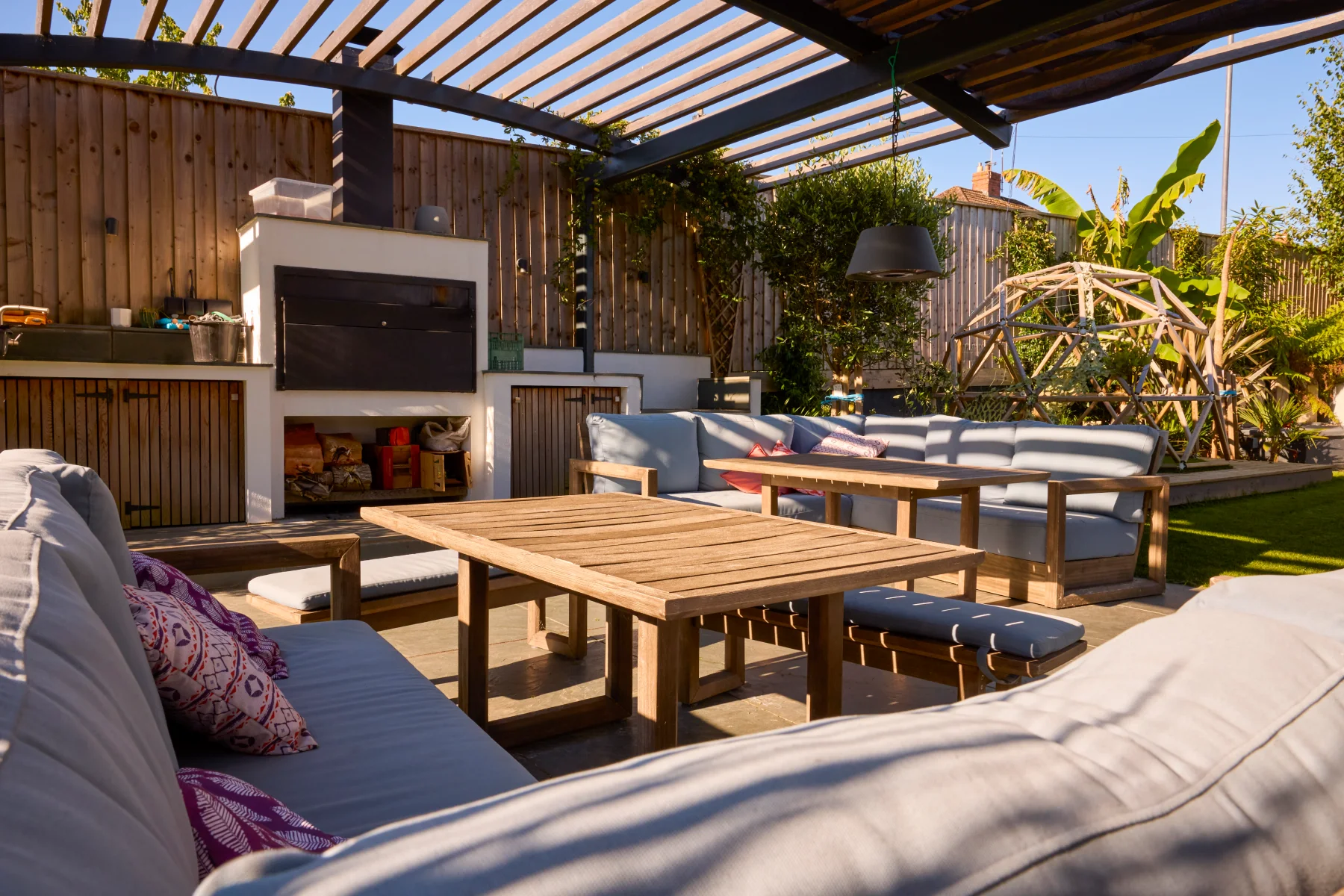
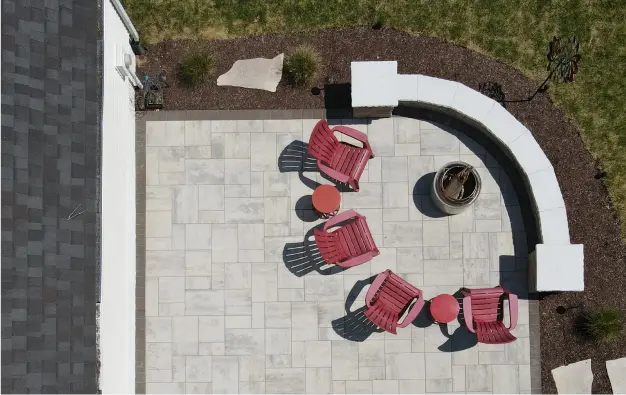
A patio is a ground-level surface built directly on a prepared base. Common patio materials include concrete, pavers (brick, stone, or manufactured), natural stone, and stamped concrete. Patios sit at or near grade and do not require structural support beyond a properly compacted base.
A deck is an elevated platform typically built from wood (pressure-treated lumber, cedar, or redwood) or composite decking material. Decks are supported by posts and footings and are attached to the home or built freestanding. They are the go-to option when the ground slopes away from the house or when homeowners want a raised outdoor area level with interior floors.
Cost Comparison: Patio vs. Deck
Cost is often the deciding factor. Here is how they compare in the St. Louis market:
| Factor | Patio | Deck |
|---|---|---|
| Relative material cost | Lower (concrete and pavers) | Higher (wood and composite) |
| Installation labor | Moderate — grading, base prep, material laying | Higher — structural framing, footings, railing |
| Permits required | Usually not for ground-level patios | Often required for elevated structures |
In general, a well-built paver patio installation costs less per square foot than a comparable composite deck, though actual pricing depends on materials, site conditions, base preparation, drainage, and finish details. Contact us for a quote based on your specific project. The gap narrows when comparing basic pressure-treated lumber decks to premium natural stone patios, but in most scenarios, patios offer more surface area per dollar spent.
Maintenance: What Each Option Demands in the Midwest
Patio maintenance
Patios are generally lower maintenance:
- Concrete requires sealing every 2–3 years. Cracks should be filled promptly to prevent water infiltration and freeze-thaw damage — a real concern in St. Louis winters.
- Pavers may shift over time and need occasional releveling. Polymeric sand between joints needs replenishment every few years. Individual damaged pavers can be replaced without disturbing the rest.
- Natural stone is the most durable but also the most expensive. Sealing is recommended to prevent staining.
Deck maintenance
Decks require more active upkeep:
- Pressure-treated wood needs staining or sealing every 1–2 years. Without it, the wood grays, splinters, and eventually rots.
- Cedar and redwood are naturally more rot-resistant but still require regular sealing.
- Composite decking does not need staining but can stain from food, develop mold in shaded areas, and retains significant heat in direct sun — a real consideration during St. Louis summers where temperatures regularly exceed 90°F.
Over a long ownership period, maintenance can narrow the initial price difference, particularly for wood decks that require regular cleaning and refinishing.
Durability and Lifespan
| Patio | Deck | |
|---|---|---|
| Lifespan | 25–50+ years (pavers and stone) | 15–25 years (wood); 25–30 years (composite) |
| Weather resistance | Excellent — handles freeze-thaw, rain, heat | Moderate — wood degrades; composite retains heat |
| Structural concerns | Minimal — settling and cracking | Footings, joists, and ledger boards can deteriorate |
In St. Louis’s climate — with hot, humid summers and freeze-thaw winters — patios built on a properly prepared base tend to outlast decks with significantly less maintenance.
Resale Value: Patio or Deck?
Resale results vary significantly by design, material, condition, and local buyer demand. In the 2025 national Cost vs. Value report:
- Backyard patio: recouped 46.0% of cost
- Wood deck addition: recouped 94.9% of cost
- Composite deck addition: recouped 88.5% of cost
These figures are national project averages, not a guarantee for any specific St. Louis property. Condition matters enormously — a 10-year-old patio that still looks great adds more value than a 5-year-old deck that has been neglected.
When a Patio Is the Better Choice
- Flat or gently sloping yard — no need for an elevated structure
- Budget priority — more usable space per dollar
- Low maintenance preference — less ongoing upkeep
- Heavy use — patios handle furniture, grills, and foot traffic without wear concerns
- Fire features — fire pits and outdoor fireplaces are safer and easier to install on a patio surface
- Longevity — you want a surface that will last 30+ years with minimal maintenance
When a Deck Is the Better Choice
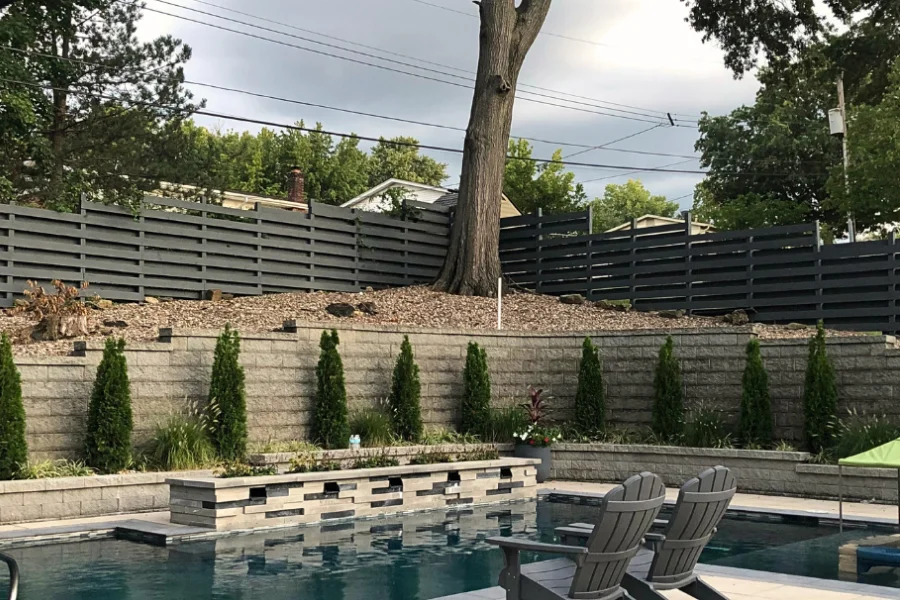
- Sloped yard — a deck bridges elevation changes without extensive grading
- Elevated entry points — when your back door is well above grade
- View maximization — an elevated deck takes advantage of sightlines
- Covered outdoor room — decks integrate well with pergolas and outdoor structures
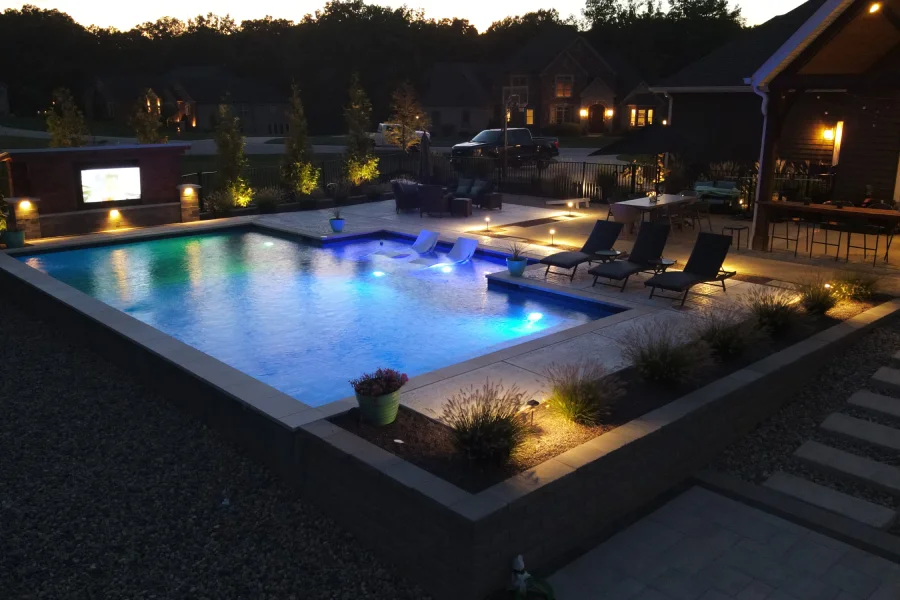
- Pool access — raised decks work well as poolside platforms
Combining Both: The Best of Both Worlds
Many St. Louis homeowners find that the best solution is a combination: a small deck off the back door for grilling and casual dining, connected by steps to a larger patio area with seating, a fire pit, and landscaping. This approach puts the deck where elevation demands it and the patio where ground-level space is most cost-effective.
A professional landscape design can map out this combination, including drainage solutions that keep both surfaces performing well through St. Louis’s heavy spring rains.
Making the Right Choice for Your Property
The patio vs. deck decision comes down to your property’s terrain, your budget, your maintenance tolerance, and how you want to use the space. Neither option is universally better — but one is almost always better for your specific situation.
At Rescue Landscaping & Outdoor Living, we design and build outdoor living spaces across St. Louis — and a portion of every project goes directly to Stray Rescue of St. Louis, helping rescue dogs find second chances. When you invest in your yard, you are also giving back.
Contact us to discuss your project and get a professional assessment of which option delivers the best result for your backyard.