
Key Points
- A useful fall cleanup is more than leaf removal. It is a chance to clear beds, protect plants, inspect drainage, and prepare irrigation before a hard freeze.
- Do not use a tidy-looking yard as the only measure of success. Heavy pruning, mulch piled against trunks, and ignored water issues can create spring problems.
- Handle routine cleanup yourself when it is safe and manageable. Bring in a landscape professional for irrigation winterization, persistent drainage concerns, or work that requires a larger design solution.
Fall landscape cleanup in St. Louis is really about one question: what needs attention now so winter does not reveal a bigger problem later? Whether you call it fall yard cleanup or pre-winter landscape maintenance, leaves, spent plant material, exposed soil, irrigation lines, and low spots all deserve a closer look before temperatures settle in.
This checklist gives homeowners a practical order of operations. It also separates the tasks that are reasonable for a homeowner from the conditions that should prompt a conversation with a landscape professional.
1. Start with a property walk, not a rake
Before collecting a single leaf, walk the yard with a notepad or phone. Look at the areas that stay wet, the beds that looked crowded or stressed in summer, the edges that have softened, and the paths where you will be walking after dark.
That quick assessment keeps cleanup from becoming a cosmetic project only. It may show that next spring’s priority is not another round of mulch, but a better bed layout, a repaired edge, or a drainage solution that protects the rest of the landscape.
Use this first pass to flag:
- Spots where water sits after rain
- Mulch or soil that has washed onto walks or patios
- Leaning, damaged, or dead-looking branches
- Exposed roots or soil around trees and shrubs
- Loose edging, shifted pavers, or signs of erosion
- Areas that will be difficult to reach once leaves or snow cover the ground
2. Clear leaves and debris without treating every leaf the same
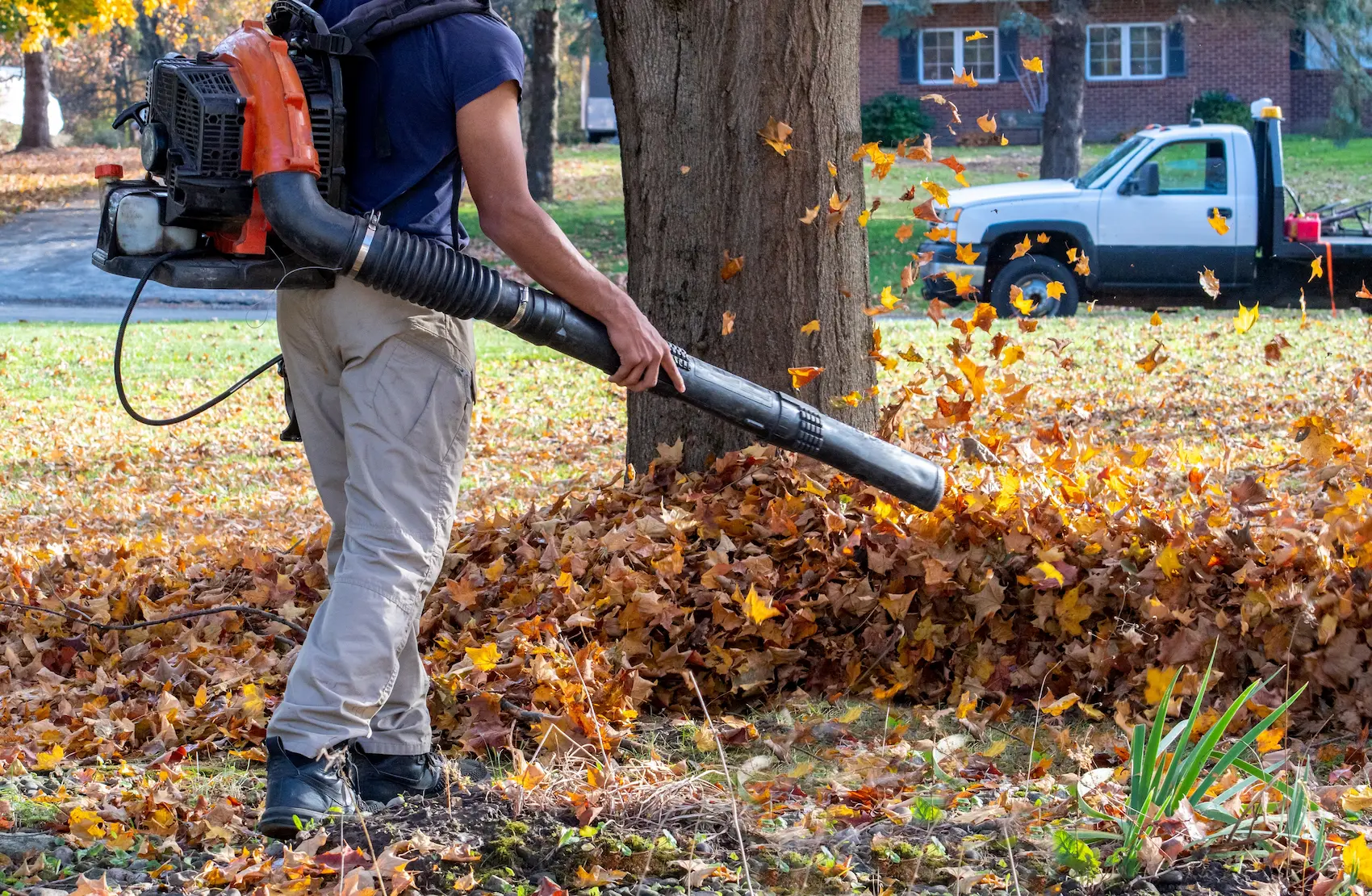
A blanket of wet leaves can block light and hold moisture against turf and planting beds. A thoughtful leaf-cleanup landscaping routine starts with clearing leaves from lawns, hardscapes, drains, and the crowns of plants.
The better question is what to do with the leaves once they are gathered. Healthy leaves may be shredded for use elsewhere in the landscape or collected for disposal, depending on their condition and the homeowner’s maintenance plan. Leaves with visible disease issues or material from plants that struggled with pests should not simply be spread back through a bed.
Pay particular attention to leaves trapped against foundations, beneath shrubs, in window wells, and around catch basins or drain outlets. Those are the places where a small pile of debris can interfere with water movement or create a soggy pocket after rain.
3. Reset planting beds before winter takes over
Fall is a good time to remove spent annuals, pull obvious weeds, and collect fallen twigs or plant debris from beds. It is also a chance to look at the structure of the bed itself: are edges still clear, are plants crowded, and is soil washing out of the area?
Avoid the temptation to cut everything down to the same height. Some plants benefit from selective cleanup while others need a different approach, so pruning decisions should be based on the plant, its condition, and the purpose of the cut. In general, remove dead, damaged, or diseased material first. Save major reshaping or uncertain pruning decisions for a time when you have a clear plan.
If a bed has outgrown its original purpose, fall cleanup can become the first step in a better solution. A cohesive landscape design and installation plan can coordinate plant spacing, hardscape edges, lighting, and drainage rather than treating each issue as a separate fix.
Add mulch for protection, not for a fresh color alone
Mulch can help moderate soil conditions and gives beds a finished appearance, but more is not better. Keep it away from tree trunks and plant crowns, and avoid covering healthy plants so deeply that moisture stays trapped where it should not.
Before adding new mulch, remove built-up layers that have crept onto trunks, smothered small plants, or washed into paths. A clean, even layer belongs over the root zone, not against the bark.
4. Plan fall planting with the next season in mind
Fall planting in St. Louis can be useful when it is part of a site-specific plan. The goal is not to fill every empty area before winter. It is to place plants where their mature size, sunlight needs, and moisture needs make sense for the landscape.
Use this checklist before adding plants:
| Question to answer | Why it matters before winter |
|---|---|
| Does the location hold water after rain? | A plant choice cannot solve a drainage problem by itself. |
| Will the plant have enough room at maturity? | Tight spacing can create pruning and airflow issues later. |
| Is the plant appropriate for the available sun and soil? | A better match reduces the need for constant correction. |
| Can the new plant be watered as needed until the ground freezes? | New plantings still need attention after installation. |
| Is the bed part of a larger upgrade planned for spring? | It may make more sense to design the whole area together. |
New plantings deserve attention until the ground freezes. If you are unsure how to protect a particular tender plant, confirm its needs rather than applying the same cover or mulch practice to every plant in the yard. Covers that trap moisture or create prolonged contact with foliage can create their own problems.
5. Do not postpone drainage checks until spring
Fall rain is useful diagnostic information. Watch the property during or soon after a rainstorm and note whether water moves away from the house, collects near a patio, backs up around a downspout, or carries mulch and soil out of a bed.
A drainage issue does not always require a large project, but it does require an accurate diagnosis. A low area may involve grading, a catch basin, a French drain, a downspout route, a retaining wall, or a combination of those elements. Repeated standing water, erosion, movement around hardscapes, or water near the foundation are good reasons to explore custom drainage and retaining-wall solutions before another winter passes.
Do not cover a drainage symptom with decorative stone or extra mulch and call it finished. If water still has nowhere to go, the material on top will not change the underlying path of the water.
6. Make irrigation winterization a separate priority
An irrigation system can look inactive long before it is ready for freezing weather. Simply turning off a controller does not confirm that water has been removed from pipes, valves, backflow components, and other system parts.
This is one task where professional help is often worth considering. Proper winterization depends on the design and components of the system, and a compressed-air blowout requires appropriate equipment and technique. Using excess pressure or overlooking a zone can damage components instead of protecting them.
If you have an irrigation system, add these questions to your fall checklist:
- Has the system been scheduled for winterization before a hard freeze?
- Are visible components accessible and clear of leaves, soil, or stored items?
- Do you know where the main shutoff is located?
- Are there areas where an irrigation leak or failed head created soggy soil during the season?
- Has the system been adjusted for any new planting beds or hardscape changes?
7. Prepare the lawn and high-traffic areas for winter use
A clean lawn is not necessarily a healthy lawn, but leaving heavy leaf cover or ruts unaddressed can make spring recovery harder. For practical winter lawn prep, continue mowing only as conditions and grass growth warrant, remove leaf mats, and avoid repeatedly walking or parking equipment on soggy ground.
Outdoor steps, paths, and drive edges also deserve a safety check. Clear leaves from walking routes, make note of uneven surfaces, and check whether water pools where it can freeze. A path that is merely inconvenient in October can become a hazard during a winter thaw-and-freeze cycle.
If a walkway, patio edge, or bed has shifted along with a water problem, treat the two observations as connected. A focused repair may help, but larger movement may call for a site-wide evaluation rather than a surface-level patch.
8. Protect tender plants and containers with a deliberate plan
Tender plants, newly installed material, and containers often need more attention than established plants. The exact approach depends on the plant, container, exposure, and forecast. Start by identifying what is actually tender in your landscape instead of covering everything at once.
Move containers or other movable items only when you can do so safely. For in-ground plantings, make sure the root zone is protected appropriately and that any cover allows for the plant’s actual needs. Do not leave plastic or other materials pressed directly against foliage for extended periods if they trap moisture.
A professional can be helpful if the landscape includes large specimens, elevated planters, or plants that require a specific protection plan. The cost of a mistake is not just the replacement plant. It can also be a gap in a carefully designed bed next spring.
9. Decide what to handle yourself and when to call a professional
Most homeowners can manage leaf cleanup, light bed tidying, basic tool storage, and an inspection of their own property. The decision changes when work involves a system, a safety issue, or a recurring condition that will not be solved by one more cleanup day.
| Handle as a homeowner when it is safe | Bring in a landscape professional when the issue is bigger |
|---|---|
| Gather leaves from lawn, beds, walks, and drains | Water stands repeatedly, soil erodes, or hardscape is moving |
| Remove spent annuals and obvious debris | Bed layout, plant selection, grading, or retaining work needs redesign |
| Check mulch placement and clear plant crowns | Irrigation needs a system-specific winterization plan |
| Note damaged branches from the ground | Branches are large, overhead, or require specialized tree work |
| Store hoses and loose garden items | A drainage problem affects a foundation, patio, or usable yard area |
Professional fall cleanup and preparation is not one fixed package. The investment typically changes with the size of the property, the amount of debris, access, plant protection needs, irrigation complexity, and whether an underlying drainage or design issue needs to be addressed. A clear consultation should separate routine cleanup from the work that would solve a longer-term problem.
10. Use fall observations to make a smarter spring plan
The best outcome of fall cleanup is not simply a neat yard. It is a record of what the landscape needs next. Save photos of low spots, worn edges, bare areas, or features you would like to improve. Then use them to decide whether spring work should be maintenance, a targeted repair, or a more complete outdoor update.
Looking through a Rescue Landscaping project gallery can also help you describe what you like and what you want a space to do differently. Inspiration is useful when it is paired with the realities of your own site: drainage, traffic, sun, access, and the way you want to live outside.
A cleaner fall yard starts with the right priorities
Fall cleanup should prepare the landscape for winter, not just make it look finished for a weekend. Clear the material that blocks water and air, protect plants intentionally, schedule system-specific work before freezing weather, and take recurring drainage concerns seriously.
If your checklist points to a landscape issue that needs more than seasonal maintenance, Rescue Landscaping & Outdoor Living can help you turn those observations into a practical plan. Schedule a consultation to discuss your property, your priorities, and the improvements that would make the biggest difference before spring.
Frequently Asked Questions About Fall Landscape Cleanup in St. Louis
When should I schedule fall landscape cleanup in St. Louis?
Start with leaf and bed cleanup as seasonal debris builds, then plan freeze-sensitive tasks around the forecast. Irrigation winterization and other system-specific work should be scheduled before a hard freeze, not after one arrives.
Should all fallen leaves be removed from planting beds?
Not necessarily. Healthy leaves may have a place in a homeowner’s landscape plan after they are processed appropriately, but leaves should not remain packed against plant crowns, foundations, drains, or lawn areas where they form a wet mat. Diseased or pest-affected material should be handled separately.
What fall landscape issues should I address before winter?
Prioritize standing water, erosion, blocked drainage routes, irrigation preparation, unsafe walkways, damaged branches, and plant protection needs. These conditions can be harder to inspect or correct once winter weather is established.