
Key Points
- Clay soil is the real culprit: St. Louis native clay subsoil has an infiltration rate close to zero, causing water to move sideways toward your foundation instead of draining downward.
- Grading matters more than you think: If your yard slopes toward your home rather than away from it, every spring rain pushes water directly against your foundation.
- Solutions exist and work: Proper drainage systems, from positive grading to retaining walls and French drains, can effectively protect your property and reclaim your outdoor space.
The Soggy Yard Problem
You step outside after a heavy May thunderstorm, expecting to see a refreshed lawn. Instead, you find standing water pooled against your foundation and a soggy, unusable backyard that won’t dry out for days. Your first thought might be that you need better mulch or more frequent maintenance. But here’s the truth: this is a soil structure problem, not a maintenance problem. And it affects nearly every homeowner in the St. Louis area.
We’ve seen this exact scenario countless times across the older bungalow neighborhoods of South City and the hilly terrain of Wildwood and Ballwin. The anxiety of watching water creep closer to your basement is real. The frustration of a swampy yard that never seems to dry out between storms is exhausting. Many homeowners feel trapped, believing that poor drainage is simply the cost of living in St. Louis. It isn’t.
As outdoor living experts who have worked extensively in this region for nearly two decades, we understand that anxiety completely. We’re going to walk you through exactly why St. Louis yards struggle with drainage, what drives the problem, and what you can actually do to fix it. By the end of this guide, you’ll have a clear picture of how to protect your home’s foundation, reclaim your outdoor space, and invest in a solution that will last for decades.
The Hidden Challenge of St. Louis Clay Soil
When we consult with homeowners in Clayton or Des Peres, the conversation often starts with what they see on the surface. But the real work happens underground. Our region is notorious for dense, clay-heavy soil that holds moisture and expands significantly when wet.
The St. Louis metro area sits on top of clay subsoil that was deposited millions of years ago. While the top layer of silt loam can handle a light drizzle reasonably well, it quickly reaches its limit during our heavy spring downpours. Once that top layer becomes saturated, which happens fast in May and June, the water hits the clay beneath. Because this clay has almost no ability to absorb water quickly, the moisture has nowhere to go but sideways.
This lateral movement is why you often discover soggy patches in your yard several feet away from where the rain actually fell. The water doesn’t sink deeper; it spreads horizontally, pooling in low spots and pressing against your foundation. This is not a maintenance problem. It is a soil structure problem, and understanding it is the starting point for any serious conversation about drainage solutions.
The Expansion Problem
Furthermore, this clay soil is expansive. It swells significantly when wet and shrinks dramatically when dry, a cycle that puts immense pressure on your home’s foundation, leading to cracking and settling over time. Homeowners in Clayton, Webster Groves, and other established neighborhoods have dealt with this for generations. The constant expansion and contraction weakens mortar joints, creates cracks in concrete, and can eventually compromise the structural integrity of your home. This is why addressing drainage is not optional; it is a critical investment in protecting your property.
How Much Rain Does St. Louis Actually Get?
St. Louis averages around 41 inches of precipitation annually, but the distribution matters far more than the total. May and June are the wettest months, with May averaging close to 4.5 inches. This rain often arrives in concentrated events rather than steady drizzle, meaning the soil gets hit with more water than it can absorb in a short window. The clay subsoil that was already holding moisture from April rains has no buffer left.
This is also the time of year when homeowners are most active in their yards, planting annuals, laying sod, and starting new landscape projects. A soggy yard in May is not just inconvenient. It actively damages new plantings by compacting soil around root zones and creating anaerobic conditions that kill plants that would otherwise thrive here. If you’re planning a sod installation or new landscaping this spring, understanding your drainage situation is critical to the success of your project.
Grading: The First Line of Defense Against Water Damage
One of the most common issues we encounter is improper grading. The ground around your home should slope away from the foundation at a rate of at least six inches over the first ten feet. This is known as positive grading, and it is the single most important factor in directing water away from your basement.
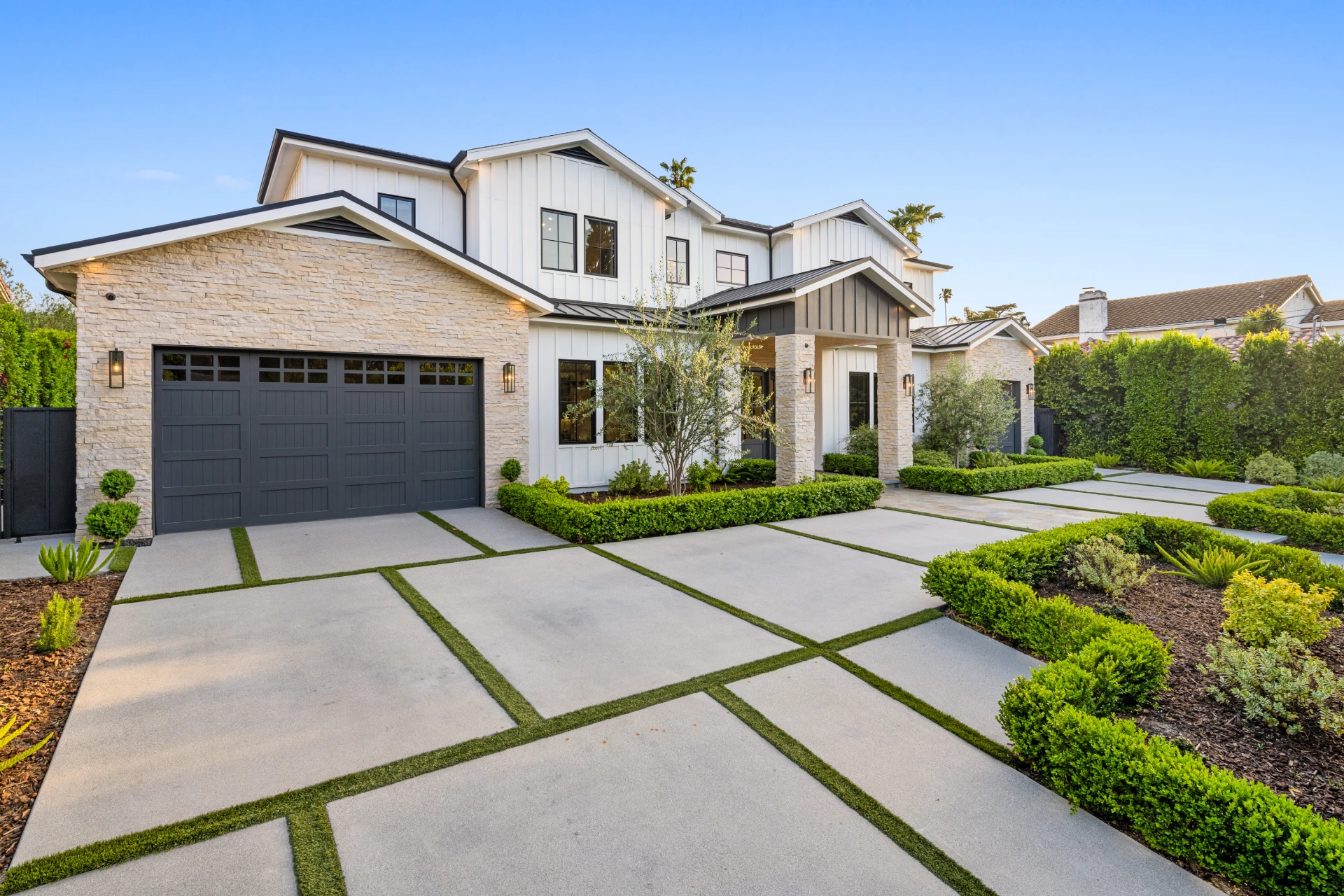
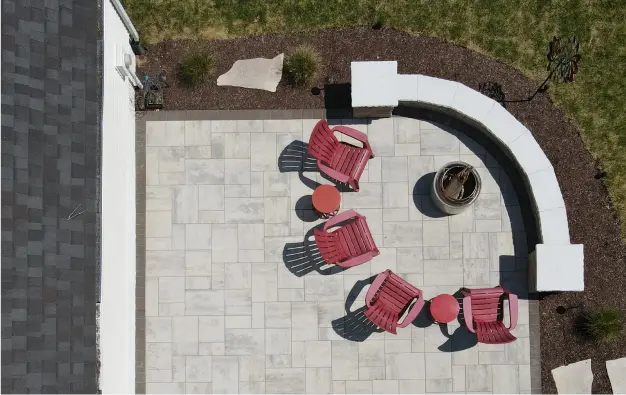
Over decades, many older homes in areas like Webster Groves, Clayton, and Ballwin have lost this crucial slope due to natural settling or previous landscaping projects. Even the addition of new impervious surfaces, such as a driveway or a new patio installation, can alter how water flows across your property. When we install a new patio, we always design the grading to work with your home’s drainage needs, not against them.
Identifying Poor Grading on Your Property
The best way to assess your grading is to spend time outside during and after a heavy rain. Watch where water moves, where it pools, and how long it stays. Does water flow toward your foundation or away from it?
Are there low spots where water collects? Does the water disappear quickly or sit for hours?
If the grade is incorrect, every storm pushes water directly toward your home, increasing the risk of water damage, foundation settling, and erosion. The good news is that grading can be corrected. Our team has helped countless homeowners across St. Louis County restore proper drainage by regrading their yards and installing new landscape designs that work with the natural flow of water rather than against it.
Retaining Walls: Multi-Purpose Solutions for Slopes and Drainage
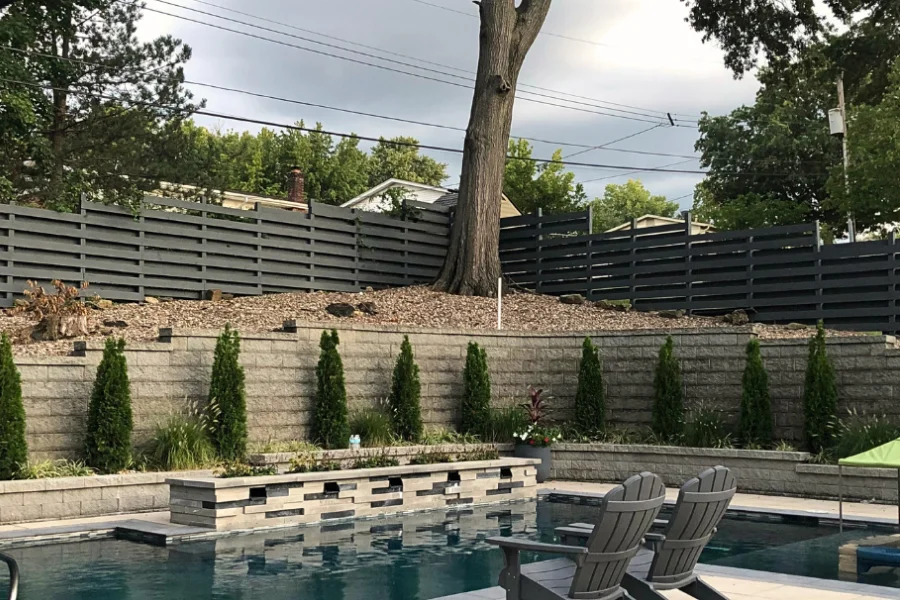
When dealing with the hilly terrain common in West County and South County, managing slopes is critical. A retaining wall is not just an aesthetic feature; it is a powerful drainage tool. These structures hold back soil, prevent erosion during heavy rains, and can be engineered to redirect water flow safely away from vulnerable areas.
Beyond their functional benefits, retaining walls offer incredible versatility. They can terrace a steep, unusable hill into level planting beds or expand the usable space for a complete outdoor living area. By incorporating proper drainage behind the wall, such as perforated pipes and free-draining gravel, we ensure that hydrostatic pressure doesn’t build up, guaranteeing the wall’s longevity through our harsh freeze-thaw cycles.
Why Proper Drainage Behind the Wall Matters
Many homeowners don’t realize that a retaining wall without proper drainage is a time bomb. When water builds up behind the wall, it creates hydrostatic pressure that can push the wall forward, causing it to lean, crack, or fail entirely. In St. Louis’s freeze-thaw climate, this problem is even more severe. Water that freezes behind the wall expands, putting even more pressure on the structure.
Our retaining walls and drainage solutions are designed with this in mind. We install perforated drain pipes at the base of the wall to collect groundwater, backfill with free-draining gravel to allow water to move through rather than pooling, and create proper exit points for that water to flow safely away from your home. This engineering approach ensures your wall will perform beautifully for decades.
Comparing Your Drainage System Options
When grading alone is not enough to solve the problem, especially in flat or bowl-shaped yards that naturally collect water, installing a dedicated drainage system becomes necessary. Understanding the differences between these systems can help you make an informed decision for your property.
| Drainage Solution | Best Application | How It Works | Ideal for St. Louis |
| French Drains | Subsurface water management; areas with persistent sogginess. | Perforated pipe buried in gravel collects and redirects groundwater away from the foundation. | Yes, excellent for clay soil conditions. |
| Catch Basins | Low spots where surface water naturally pools. | Captures large volumes of surface runoff during heavy storms and directs it to a drainage outlet. | Yes, works well for concentrated rain events. |
| Channel Drains | Along driveways, patios, or pool decks. | Prevents water from sheeting across hardscapes and into the yard or home. | Yes, essential for new hardscape installations. |
| Dry Wells | Areas where water cannot be easily routed to a lower elevation. | Holds water underground, allowing it to slowly percolate into the surrounding soil. | Yes, useful for properties without natural drainage outlets. |
Choosing the right system depends entirely on your property’s specific topography and where the water needs to go. A true design-build firm will assess your site carefully to ensure the system is designed specifically for your property’s needs, not a generic solution.
The Cost of Choosing the Wrong System
It’s tempting to install a generic drainage solution based on what worked for a neighbor or what you read online. However, every yard is different. A French drain that works perfectly on one property might be completely ineffective on another if the grading or soil conditions are different. Investing in a professional assessment upfront ensures that your drainage system is designed specifically for your property’s needs.
What Happens When Drainage Fails
It’s tempting to put off drainage improvements, hoping the next storm won’t be as severe. However, the costs associated with poor drainage compound quickly. Persistent moisture creates anaerobic conditions in the soil, suffocating the roots of your expensive landscaping and trees. Newly planted shrubs and perennials simply won’t survive in waterlogged soil, no matter how well they are otherwise cared for.
More concerning is the threat to your home’s structural integrity. The constant pressure from expanding clay soil and pooling water can lead to severe foundation damage and flooded basements. Cracks in the foundation are not just cosmetic; they are a sign that water pressure is literally pushing your home apart. Flooded basements destroy personal belongings, create mold and health hazards, and require expensive remediation.
Real-World Drainage Problems We’ve Seen
In our years working across St. Louis neighborhoods, we’ve seen drainage failures that cost homeowners tens of thousands of dollars to repair. A homeowner in Wildwood ignored a soggy corner of their yard for five years, only to discover that water had undermined the foundation of their deck, which then collapsed during a family gathering. Another property in Clayton had such severe grading issues that water was literally flowing into the basement during every heavy rain, causing mold and structural damage.
These aren’t hypothetical scenarios. They happen every year in St. Louis. The homeowners we work with now are often those who have already experienced a drainage failure and are determined to prevent it from happening again. Don’t wait for a crisis. Invest in a proper drainage solution now.
Drainage Assessment Checklist for Your Property
Before you call a contractor, use this checklist to assess your property’s drainage situation. This will help you communicate your concerns clearly and ensure that any professional you hire understands the full scope of the problem.
Foundation and Basement:
Check for any cracks in your foundation or basement walls. Have you experienced any water seepage or flooding in your basement? Do you notice moisture or dampness in your basement after heavy rains?
Yard and Grading:
Does water pool in any areas of your yard after a rain? Does the ground slope toward your home or away from it? Are there any low spots or depressions where water collects? How long does it take for standing water to drain after a rain?
Existing Hardscapes:
Do you have a patio, driveway, or walkway that sheds water into your yard? Is water flowing from these surfaces toward your home or away from it? Are there any visible erosion patterns around these features?
Landscaping and Plants:
Do your plants look stressed or unhealthy in certain areas? Are there areas of your yard that stay soggy for days after a rain? Have you noticed any dead patches or areas where plants simply won’t grow?
Neighboring Properties:
Is water flowing onto your property from your neighbors’ yards? Are there any drainage issues visible on adjacent properties?
Protecting Your Investment with Expert Solutions
Addressing drainage issues requires more than just digging a trench; it demands a comprehensive understanding of St. Louis soil, regional weather patterns, and proper landscape engineering. By implementing the right combination of grading, retaining walls, and drainage systems, you can protect your home from water damage and create a functional, beautiful outdoor space.
At Rescue Landscaping & Outdoor Living, we specialize in designing and installing robust drainage solutions tailored to the unique challenges of St. Louis properties. Our experienced team will assess your yard’s specific needs and build a system that works effectively while enhancing your landscape. We understand the local soil conditions, the seasonal rainfall patterns, and the permitting requirements across St. Louis County, Clayton, Webster Groves, Wildwood, and Ballwin.
Plus, every project we complete helps support local dog rescues, so you’re not just protecting your home; you’re also giving back to animals in need. Contact us today to schedule a consultation and take the first step toward a drier, safer yard.
Frequently Asked Questions
How do I know if I need a French drain or just better grading?
If water pools on the surface and flows toward your house, grading is likely the first step. However, if your yard remains soggy for days after a rain, even with a proper slope, a French drain is usually necessary to manage the subsurface water trapped by the clay soil. Often, the best solution combines both improved grading and a subsurface drainage system.
Can a retaining wall really solve my drainage problems?
Yes, when engineered correctly with proper backfill and perforated drain pipes, a retaining wall prevents soil erosion on slopes and safely redirects water runoff away from your home’s foundation and outdoor living areas. The key is ensuring that the wall itself has adequate drainage to prevent water from building up behind it.
Will fixing my drainage ruin my existing landscaping?
While installing drainage systems requires some excavation, a true design-build firm will carefully plan the routing to minimize disruption. We often integrate drainage solutions seamlessly into new or existing landscape designs, ensuring the final result is both functional and beautiful. In many cases, improving drainage actually improves the health of your existing plants.
How long does a drainage system last?
Quality drainage systems, when properly installed and maintained, can last 30 to 50 years or more. The key is ensuring that the system is designed correctly for your specific soil and weather conditions. Regular maintenance, such as keeping drain pipes clear of debris, will extend the life of your system significantly.
What is the best time of year to install a drainage system?
Spring and fall are ideal times for drainage work, as the soil is not frozen and the weather is generally more predictable. However, drainage systems can be installed year-round if necessary. We recommend planning your project before the problem becomes urgent, which gives us time to evaluate soil, drainage, access, and materials properly.